
In 48 years as a general contractor, I've seen a lot of things go wrong in homes.
Pipes break. Water heaters leak. Electrical problems happen. People smell gas. Appliances fail.
That's part of owning a home.
But I've also noticed something else over the years.
Sometimes the problem itself isn't what causes the most damage.
It's what happens during the first few minutes after the problem is discovered.
People panic. They start searching. They make phone calls. They try to remember something someone told them ten years ago.
So here are a few common mistakes I've seen—and some simple things you can do before an emergency to avoid them.
Mistake #1: Looking for the Shutoff During the Emergency
This is probably the biggest one.
A homeowner discovers water pouring onto the floor and then starts looking for the main water shutoff.
Under the sink?
Garage?
Outside?
Side of the house?
Meanwhile, the water isn't waiting.
Find your main water shutoff before you need it. Make sure it's accessible and that you understand how it operates.
Mistake #2: Assuming Someone Else Knows
I've heard this many times:
“My husband knows where it is.”
“My wife handles that.”
“The landlord knows.”
“The plumber showed me once.”
That's fine if that person happens to be standing next to you when something goes wrong.
Preparedness shouldn't depend on one person.
Make sure the responsible people in your household know where the water, gas, and electrical shutoffs are located.
Mistake #3: Not Having the Right Tool Nearby
This is especially true with gas shutoffs.
You may own the correct wrench.
The question is: Where is it?
If it's buried under paint cans, Christmas decorations, and three toolboxes in the garage, it isn't doing you much good.
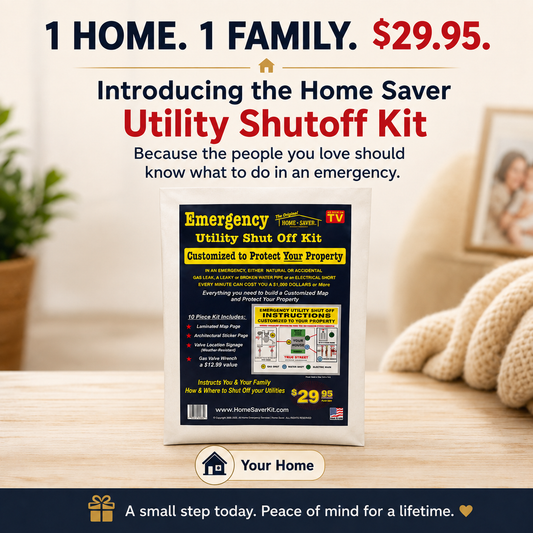
One reason we designed the Home Saver Kit gas wrench to hang near the gas shutoff is simple: that's where you're going to need it.
Mistake #4: Relying on Your Phone for Everything
Phones are wonderful tools.
But during an emergency, you may have no power, a weak signal, a dead battery, or simply not have time to start searching online for instructions.
And sometimes your phone is exactly where you left it—which is nowhere near you.
Emergency information should be available physically in your home.
That's why I'm a big believer in simple maps, labels, tags, and instructions that don't require technology.
Mistake #5: Never Checking Things Until Something Goes Wrong
Homes change.
Valves age. Labels fade. Storage boxes get placed in front of important equipment. Landscaping grows around outside utilities.
Something that was accessible five years ago might not be accessible today.
Every so often, walk around your home and check your utility locations.
Make sure they're visible and accessible. If a valve appears damaged, corroded, stuck, or you're unsure about its condition, have the appropriate professional inspect it rather than forcing it.
Mistake #6: Trying to Do Too Much
There's another side to preparedness that's just as important.
Knowing your limits.
If you smell gas, see sparks, encounter standing water around electrical equipment, see fire, or believe you're facing an immediate danger, getting people to safety and contacting the appropriate emergency service or utility takes priority.
Preparedness isn't about being a hero.
It's about making good decisions quickly.
A Little Preparation Goes a Long Way
You don't need a garage full of survival equipment to be a prepared homeowner.
Start with the basics.
Know where your utilities are.
Know how they're shut off.
Keep important areas accessible.
Have the right tools available.
And make sure the people in your household know the plan.
That's really the idea behind Home Saver Kit.
We organize the information and tools so that when something goes wrong, you can spend less time figuring out what to do and more time doing it.
Because during a home emergency, the best time to figure things out is usually before it happens.
Be Ready. Be Confident. Be a Home Saver.