
Most homeowners walk past their electrical panel hundreds of times without giving it much thought.
Then something happens.
An outlet starts smoking. Water is leaking near something electrical. A breaker keeps tripping. There's storm damage.
Suddenly, that gray metal box on the wall becomes pretty important.
After working in construction for 48 years, I've learned that homeowners don't need to be electricians—but they should understand a few basics about their home's electrical system.
And knowing where your electrical panel is should be near the top of the list.
Start by Finding Your Electrical Panel
Depending on your home, the electrical panel might be in the garage, basement, utility room, hallway, closet, or on an exterior wall.
Open the panel door and take a look.
You should see rows of individual circuit breakers and, in many homes, a larger main breaker that controls electrical service to the house.
The individual breakers control different circuits, including kitchen outlets, bedrooms, lighting, appliances, and so on.
At least, that's what they're supposed to control.
Whether the handwritten labels inside the panel actually match what's in your house is another story.
Make Sure Your Breakers Are Clearly Labeled
I've seen plenty of electrical panels labeled with descriptions like:
“Back Room.”
“Plugs.”
“Lights.”
And occasionally something written 25 years ago that nobody can read anymore.
That's not particularly helpful during an emergency.
Take the time to identify your circuits and clearly label them. You want someone unfamiliar with the electrical system to be able to understand the panel without guessing.
If you aren't comfortable identifying circuits yourself, have an electrician help you.
When Would You Shut Off the Power?
There are situations where shutting off an individual circuit, or possibly the home's main electrical service, may be appropriate.
For example, there could be an electrical problem involving a particular appliance or circuit.
But here's something important:
Electricity and water are a dangerous combination.
If your electrical panel is wet, surrounded by standing water, damaged, sparking, or otherwise unsafe to approach, don't try to be a hero.
Stay away and contact emergency services, your utility company, or a qualified electrician as appropriate.
Knowing how to shut off electricity doesn't mean you should attempt it under unsafe conditions.
Good preparedness also means knowing when not to touch something.
Know Your Main Breaker
If your home has a main breaker in the panel, make sure you know which one it is.
Some homes have the main service disconnect located somewhere else, so don't assume.
If you're uncertain about your electrical system, ask a licensed electrician to show you.
It might take five minutes.
And once you know, you know.
Make Sure Someone Else Knows Too
This is the part homeowners tend to forget.
You may know exactly where the electrical panel is.
Does your spouse?
Do your older children?
Would a house sitter know?
During an emergency, clear information beats somebody standing in the garage opening cabinets and calling you for directions.
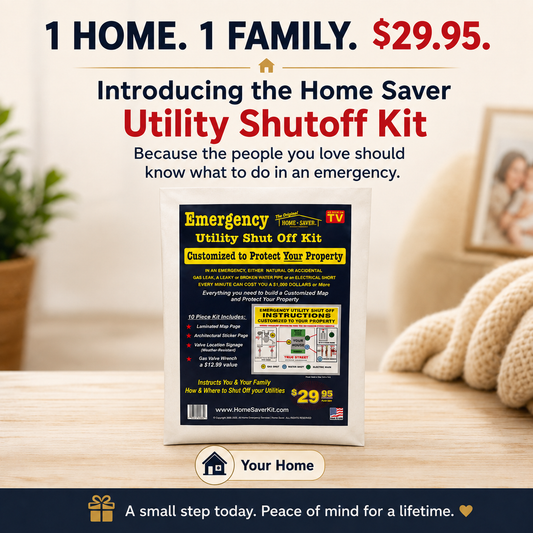
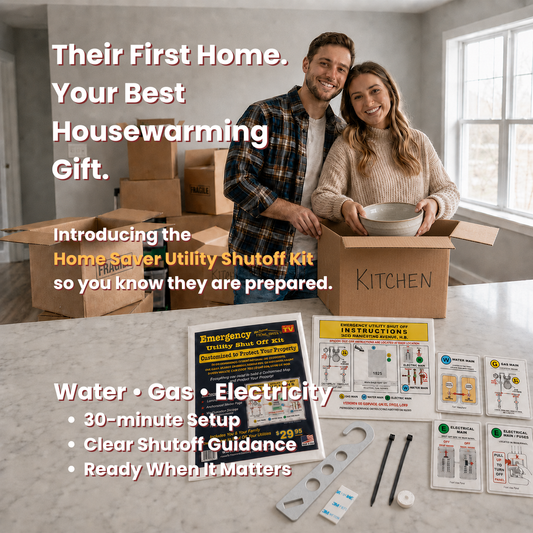
That's why the Home Saver Kit includes electricity as one of the three major utilities we help homeowners locate and identify.
Water. Gas. Electricity.
The goal isn't to turn anyone into a contractor.
It's to remove the guessing.
Take Five Minutes Today
- Go find your electrical panel.
- Look at the labels.
- Identify your main breaker or service disconnect.
- Make sure the area around the panel is accessible.
- And make sure the people in your household know where it is.
You don't need to understand everything about electricity to be better prepared.
Sometimes preparedness starts with something as simple as knowing where to go when the lights aren't the problem, but the electricity is.
Be Ready. Be Confident. Be a Home Saver.